The DJ’s Guide to Collecting Deposits and Getting Paid On Time
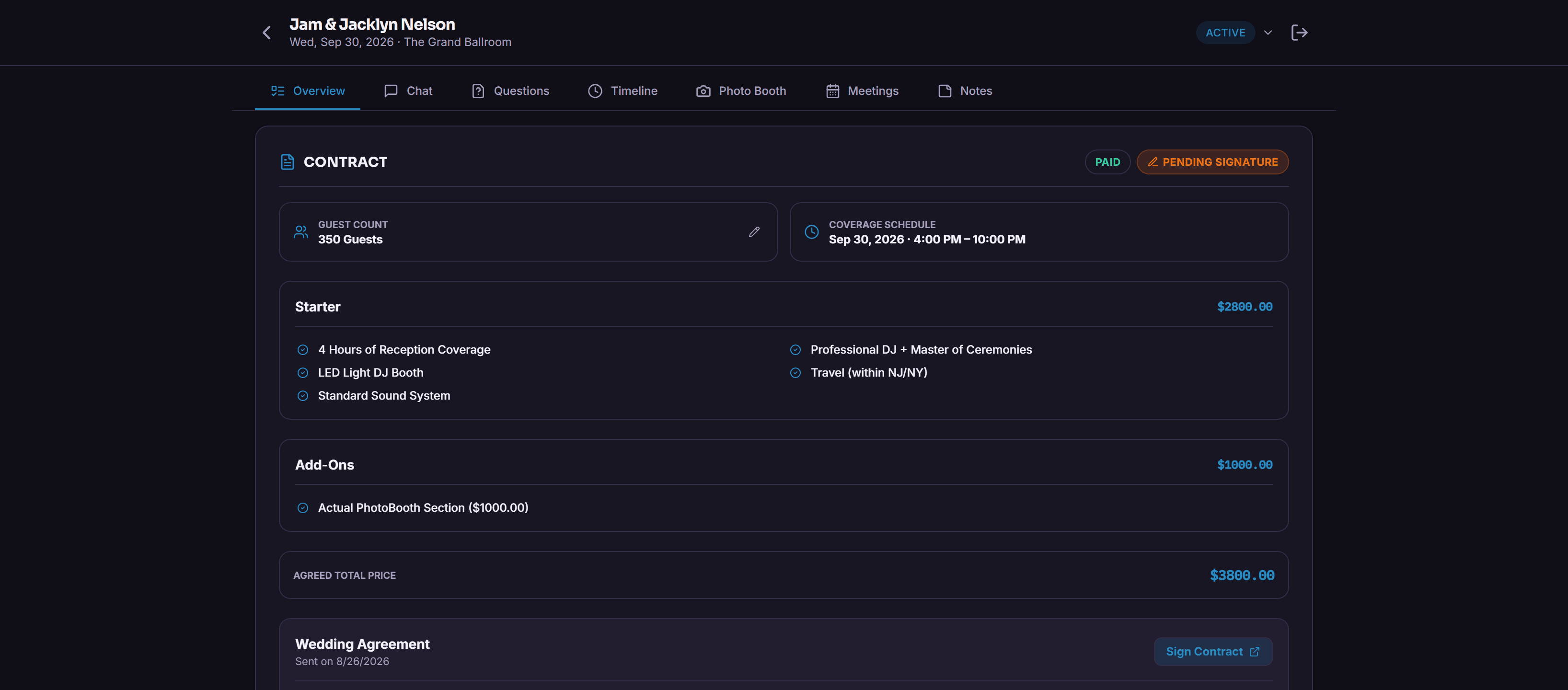
Chasing a balance payment two weeks before an event is one of the most avoidable stresses in this business, and it’s almost never a client problem — it’s a structure problem. If the terms only live in a conversation, they get forgotten. Put them in the signed contract with a real date and they mostly handle themselves.
Put the schedule in the contract, not in a side email
A deposit and due date that only exist in an old email thread are easy to lose. Use a specific date in the signed agreement — not "two weeks before the event," which requires someone doing math correctly three months from now.
Make paying easier than not paying
If collecting a balance means the client has to dig up your Venmo or find an old email, you’ve built in delay. A payment link in the same portal they already used to confirm the run sheet removes the "wait, where do I even send this" hesitation.
Automate the reminder, skip the awkward text
The uncomfortable part was never the money — it’s having to bring it up. An automatic reminder as the due date approaches means you’re rarely the one who has to say anything, and by the time you might need to, most people have already paid.
Know what’s outstanding without cross-referencing a spreadsheet
A dozen events at different payment stages during peak season is a lot to hold in your head. A view of who’s paid and who isn’t, without opening three tabs, saves real time exactly when you have the least of it.
Key takeaways
- Specific due dates in the contract, not in conversation
- Same portal for paying as for everything else — less friction
- Automated reminders instead of an awkward follow-up
- One view of what’s outstanding across every event
FAQ
What’s a typical deposit amount for DJ services?
20-50% is common, varies by market. Whatever you land on, put the amount and date in the signed contract.
How do I handle a client who’s consistently late paying?
Automated reminders sent early handle most of it. For repeat offenders, a stated late-payment policy in the contract gives you something concrete to point at.
Related feature
Contracts & Payments
No separate e-sign subscription, no payment link you have to hunt down in an old email.